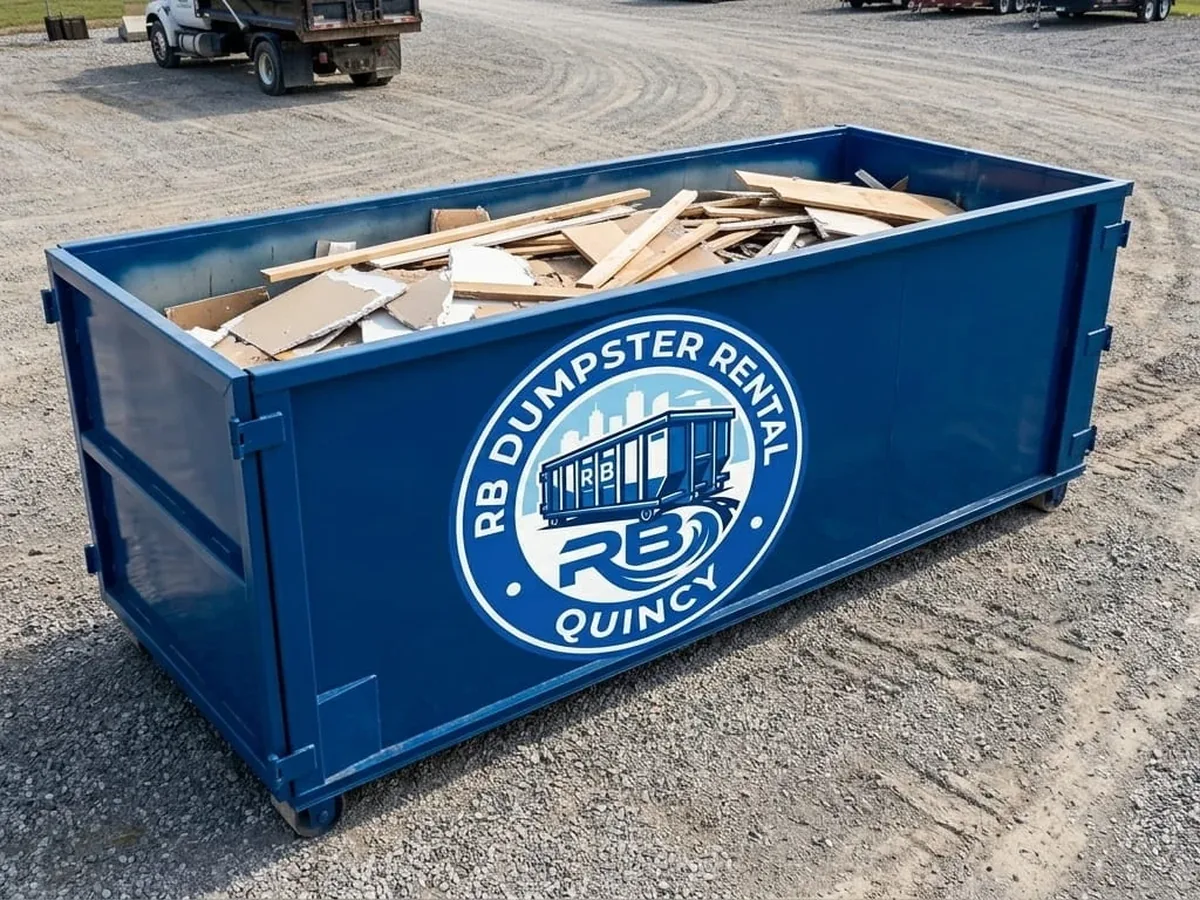
The single biggest factor in whether a dumpster rental goes smoothly is where the container actually sits, and that decision gets made before the truck ever leaves our yard. A loaded 15 or 20 yard roll-off can weigh several tons by the time it's full, and it sits in one spot for days at a time. Pick the right surface and protect it properly, and there's no issue. Pick a soft spot after a rainstorm or skip the protective boards, and you can end up with ruts in the yard or marks on a driveway that didn't need to happen. This is a rundown of how we think about placement on jobs around Quincy and the surrounding Adams County towns, so you know what to expect and what to ask for when you book.
Driveway vs. street: know your options
For most Quincy homes, the driveway is the best spot for a roll-off. It's flat, it's stable, and it's already built to carry vehicle weight, which makes it the default choice on the large majority of our deliveries. But not every property has a driveway that fits a 20 yard container, and on some jobs — a tight lot in an older part of town, a driveway blocked by a parked car during a renovation, a home with no driveway at all — the street is the only realistic option.
Within Quincy city limits, placing a dumpster on the street is addressed directly under City of Quincy Code of Ordinances § 91.172, which allows a container to sit in the public right-of-way as long as it's positioned so it doesn't create a hazard to public safety — meaning it can't block a sight line at an intersection, sit in a marked traffic lane, or interfere with normal street use. In practice this usually means placing it along the curb line in front of the property rather than out toward the center of the road, and being mindful of nearby stop signs or driveway aprons that other vehicles rely on. If your project is in one of the surrounding villages — Camp Point, Golden, Mendon, Ursa, and the rest of our service area — the specific rule may differ from Quincy's, so it's worth a quick call to the village office to check local placement guidance before the day of delivery, especially if a driveway isn't going to work.
- Driveway placement is simplest, requires no permit conversation, and is the first thing we look at on every job.
- Street placement inside Quincy is allowed under § 91.172 when positioned to protect public safety — clear of intersections, sight lines, and traffic lanes.
- Outside Quincy, check with the village office directly, since rules on right-of-way placement vary town to town.
Protecting asphalt, concrete, and pavers
Once we know the spot, protecting the surface underneath is the next step. A loaded dumpster doesn't spread its weight evenly — it rests on a narrow steel frame and two sets of roll-off wheels at the rear, which means the load concentrates into a few contact points rather than across the whole footprint. On a solid, well-maintained driveway that's rarely a problem. On older asphalt, a driveway with existing cracks, or any paver surface, it's worth taking a few extra steps:
- Protective boards — sheets of plywood or dedicated placement boards set under the container's rails spread that point-load weight across a much wider area, which is the single best thing you can do to protect a driveway that's already showing wear.
- Pavers and stamped concrete — these surfaces are more prone to shifting or cracking under concentrated weight than a poured slab, so we'll almost always recommend boards here regardless of the surface's condition.
- Hot weather — asphalt softens in direct summer heat, and a dumpster sitting on softened asphalt for several days can leave shallow depressions where the wheels sit. If you're booking during a stretch of 90-degree days, mention it and we'll plan for boards.
- Existing damage — if your driveway already has cracks, heaving, or old damage, tell us before delivery so there's a clear record of the driveway's condition going in.
Soft ground and wet weather
When a driveway genuinely isn't an option and the container has to sit on grass, gravel, or bare dirt, timing and ground condition matter more than almost anything else. Adams County gets its share of spring rain, and a yard that's fine on a dry Tuesday can turn soft enough by the weekend that a loaded dumpster sinks in and leaves ruts. A few things that help:
- Avoid scheduling delivery immediately after a heavy rain if the container is going on grass or an unpaved area — give the ground a day or two to firm back up first.
- Use plywood or placement boards across the full footprint, not just under the wheels, when placing on soft ground.
- Flag any septic lines, well caps, or shallow buried utilities in the placement area before we schedule delivery — this is information we need ahead of time, not something to figure out with the truck already on site.
- Check the spot after pickup, especially following wet weather, for any compaction or standing water that might affect drainage or lawn recovery.
Clearance for gates, trees, and the delivery truck
Roll-off trucks need room to maneuver, both to get into position and to lift the container off the truck bed. A few clearance points worth checking before delivery day:
- Overhead clearance — plan on roughly 20 to 25 feet of vertical clearance at the drop-off spot for the truck's raised bed during placement and pickup. Low tree limbs or power lines near the intended spot need to be flagged ahead of time.
- Gate width — if the container needs to go through a side yard or backyard gate, measure the opening. Most standard containers need at least 10 to 12 feet of clear width to pass through comfortably.
- Straight approach — the truck backs the container into place along a fairly straight line, so a driveway with a sharp curve or a narrow approach between a house and a fence can limit exactly where the container ends up.
What to have ready when you book
The more specific you can be when you call, the more likely the crew places the container exactly where you want it on the first try. Before you book with RB Dumpster Rental Quincy, it helps to know:
- The exact spot you have in mind — "right side of the driveway, closest to the garage" is more useful than "in the driveway"
- Whether the surface is driveway, street, or grass/gravel, and its general condition
- Any trees, power lines, gates, or overhangs near the drop-off spot
- Whether the project is a residential cleanout or renovation job, since that affects the size we'll recommend
- How long you expect to need the container, so we can plan the pickup window around your project timeline
If you're not sure which size fits your job or what it's likely to cost, our dumpster rental cost guide breaks down typical pricing for the Quincy area. Either way, a five-minute conversation about placement before delivery day saves everyone a headache — the crew shows up knowing exactly where the container goes, and your driveway, lawn, or curb strip stays in the shape you found it.