Roof Replacement Checklist: Getting the Dumpster Right in Quincy
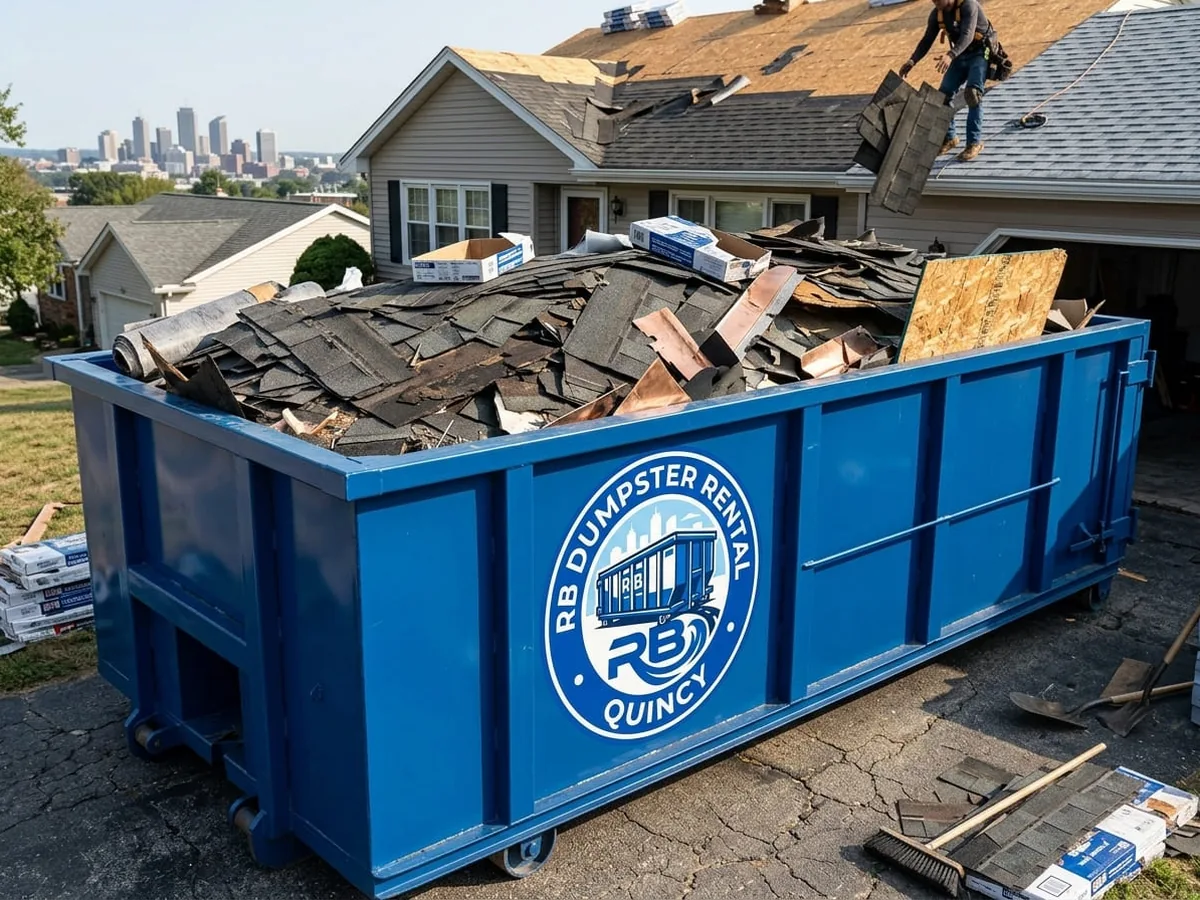
Roofing debris is heavier and messier than people expect. Here's how to size, place, and time a dumpster for a roof tear-off anywhere in the Quincy area.
ReadConstruction guide
How to size and schedule dumpster swaps by construction phase so a full container never stalls your crew on a Quincy-area build.
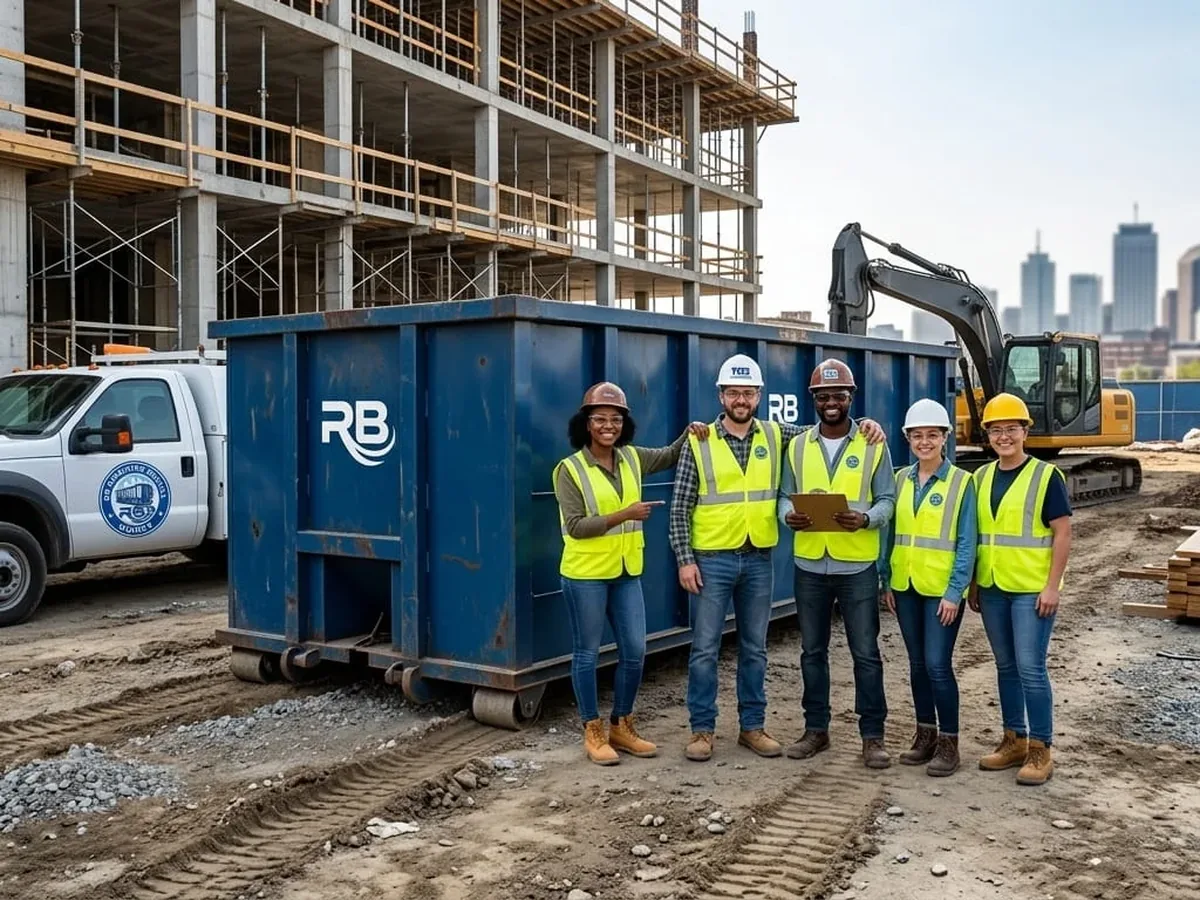
A construction dumpster that fills up on a Tuesday and doesn't get swapped until Friday isn't just an inconvenience — it's a crew standing around with nowhere to put debris, and that costs real money on a job. Whether it's a new home build in Quincy, an addition in one of the surrounding Adams County villages, or a remodel that generates debris in waves, matching container size and swap schedule to each phase of the build keeps the job moving instead of stalling around a full dumpster.
Unlike a cleanout or storm cleanup, new construction produces different types and volumes of debris at every phase, and treating the whole project as one dumpster order almost always leads to either paying for space that goes unused early on, or running out of room right when the crew needs it most. The fix is planning size and swap timing around the phase of work, not around the whole project at once.
Early in a build, debris is mostly cut-off lumber, packaging from delivered materials, and general site cleanup. It's bulky but relatively light, which makes this the phase where a mid-size container goes furthest.
Once framing is closed in, debris shifts from bulky-and-light to smaller-and-heavier: drywall scrap, joint compound buckets, flooring cutoffs, trim, and packaging from finish materials. Drywall in particular adds up in weight fast, especially on a full interior of a new build.
On builds that include roofing work, tear-off or new roofing scrap generates a short, heavy debris load concentrated in a narrow window of the project. Roofing debris is dense — a modest pile of old shingles or underlayment can weigh far more than the same volume of framing scrap.
The real cost of construction debris isn't the dumpster rental — it's a crew that can't work because there's nowhere to put material. A few practices keep that from happening on Quincy-area jobs:
New construction and additions happen all across our service area, not just inside Quincy proper — Camp Point, Clayton, Coatsburg, Columbus, Golden, La Prairie, Liberty, Lima, Loraine, Mendon, Payson, Plainville, and Ursa all see new builds and additions, and so does Hannibal, Missouri, just across the river. A few things make coordination easier on outlying sites:
| Build phase | What to have ready when scheduling |
|---|---|
| Delivery (site prep / framing start) | Clear placement spot, driveway or gravel access confirmed |
| Mid-project swap | Rough date range based on framing or drywall progress |
| Final pickup | Confirmed date once punch-list debris is cleared |
Because we're based right in Quincy, reaching outlying build sites across Adams County or over to Hannibal doesn't mean a long staging drive before the truck even starts toward the job — that keeps swap turnaround fast even outside city limits.
Most of our construction accounts are general contractors managing several phases and, often, several jobs at once across the region. Setting up a standing order pattern — a known container size for framing, a known swap trigger for finish work, and a direct line for scheduling — means less time spent re-explaining the job every time a container needs attention. Our construction dumpster rental service is built around exactly this kind of phased, multi-swap project rather than a single one-off container.
Call (217) 860-6534 to set up dumpster service for a new build or addition anywhere in Quincy or the surrounding Adams County area, including Hannibal, Missouri. Tell us the phase you're starting with and roughly how the project is scheduled, and we'll set expectations for swap timing up front instead of leaving it to a phone call once a container is already full. Pricing in the Quincy area generally runs $275 to $800 per container depending on size and rental length, and multi-swap projects can often be set up with a standing arrangement for the length of the build.
Talk to a real person
Call (217) 860-6534 and describe the job. Flat price, stated tonnage allowance, and a delivery window on the same call.
Mon–Sat 7:00am – 7:00pm
From this guide
Most single-family builds start with a 20 yard container for framing debris, stepping up to a 30 yard for larger custom homes. Drywall and finish debris phases often warrant a separate container since that material is heavier by volume than framing scrap.
Order the next swap before the current container is full, not after it's already blocking work. Tracking framing or drywall progress usually gives a good estimate of fill date within a few days, and a standing relationship with one hauler speeds up swap requests.
Yes. We serve new construction and additions throughout Adams County, including Camp Point, Clayton, Coatsburg, Columbus, Golden, La Prairie, Liberty, Lima, Loraine, Mendon, Payson, Plainville, and Ursa, as well as Hannibal, Missouri.
It can, but roofing material is dense and adds weight fast, so a separate short-term container for roofing debris often works out better than mixing it into whichever dumpster is already on-site for another phase.
Keep reading
Roofing debris is heavier and messier than people expect. Here's how to size, place, and time a dumpster for a roof tear-off anywhere in the Quincy area.
ReadClearing out a family home is hard enough without worrying about the dumpster. Here's how sizing, pacing, and sorting usually work for Quincy-area cleanouts.
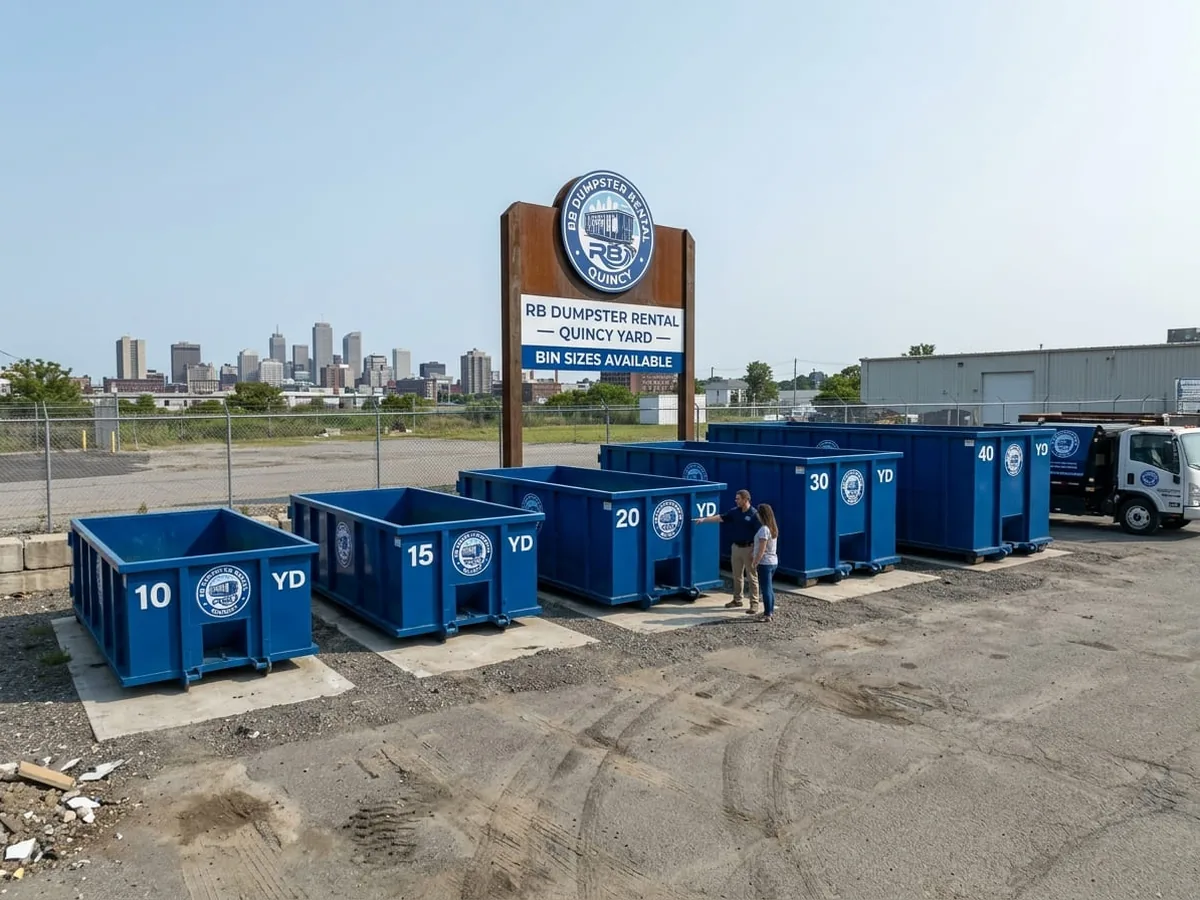
ReadFrom a 10-yard for a garage cleanout to a 40-yard for new construction, here's a full breakdown of every dumpster size we offer around Quincy.
Read