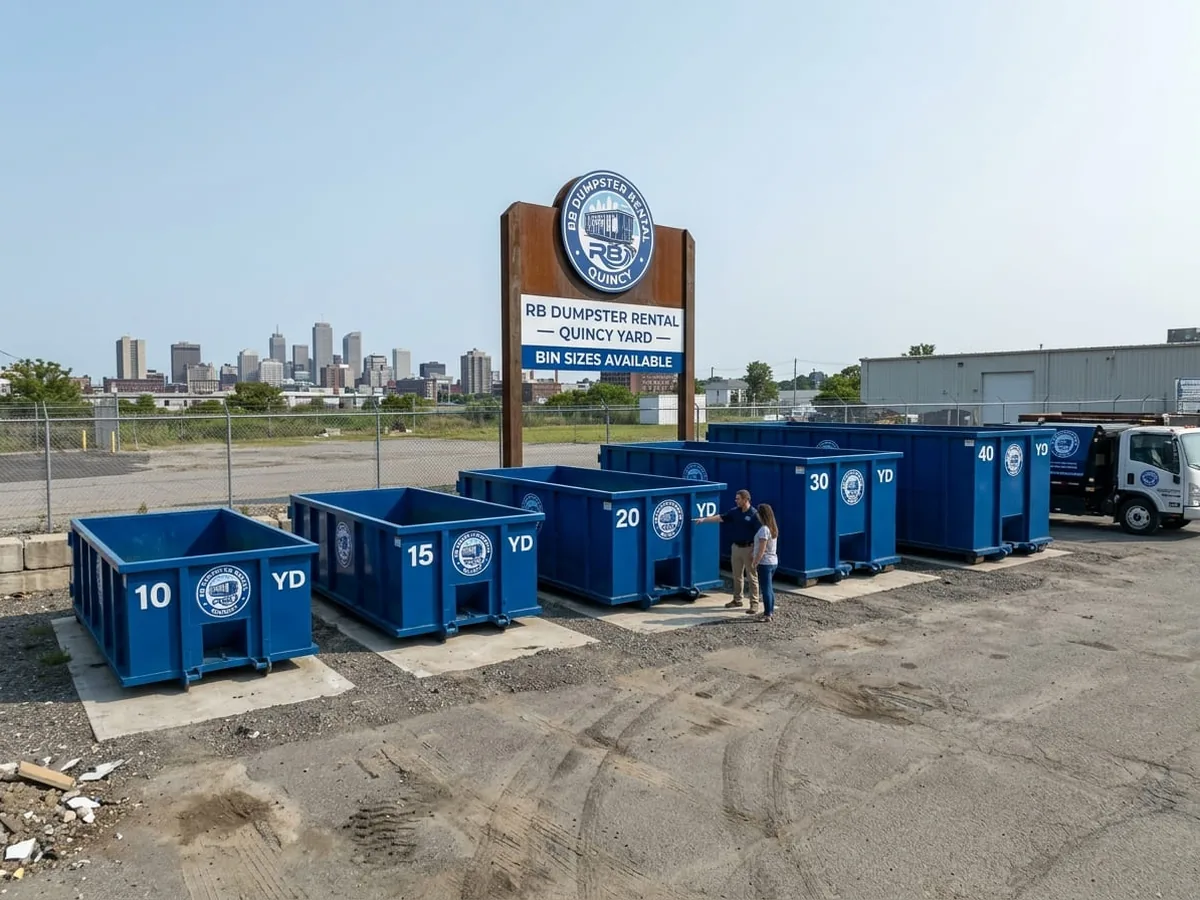

A Practical, No-Pressure Guide to Estate Cleanouts in Quincy
Clearing out a family home is hard enough without worrying about the dumpster. Here's how sizing, pacing, and sorting usually work for Quincy-area cleanouts.
ReadRoofing guide
Roofing debris is heavier and messier than people expect. Here's how to size, place, and time a dumpster for a roof tear-off anywhere in the Quincy area.
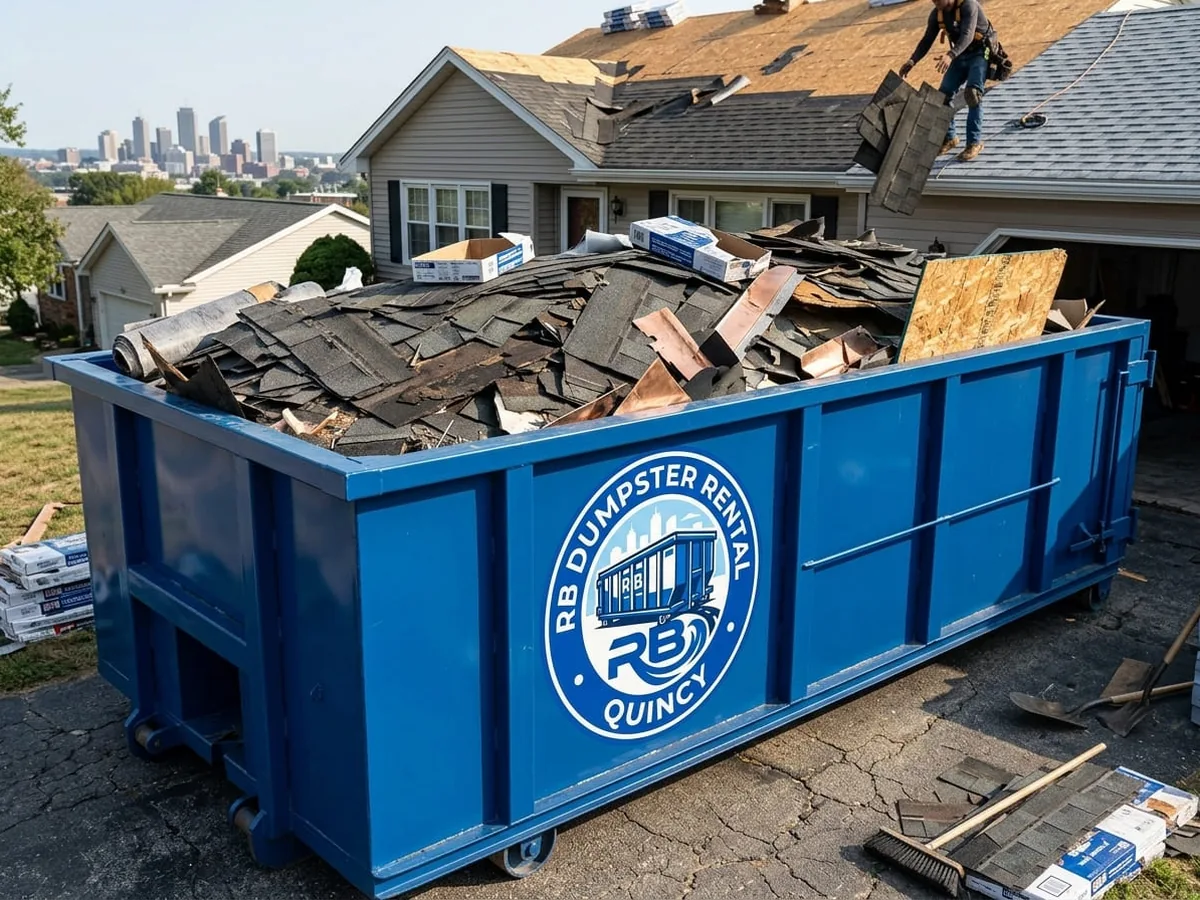
If you're tearing off and replacing a roof anywhere in Quincy or the surrounding Adams County towns this year, the dumpster is not an afterthought — it's the thing that keeps your roofing crew moving instead of standing around waiting on a driveway full of shingles. The right size comes down to roof squares and the number of layers coming off, not just how the yard number sounds. Get that wrong and you'll either pay for empty space or get hit with an overage fee when the container comes in too heavy. Here's the checklist our crew walks Quincy-area homeowners and roofers through before we drop a container.
Roofers measure in "squares" — one square equals 100 square feet of roof surface. A single square of standard three-tab or architectural asphalt shingles typically weighs somewhere around 200 to 350 pounds once it's torn off, and that number roughly doubles if there's a second layer underneath. A lot of older homes around Quincy, especially in the South Side German Historic District where you'll find 19th-century brick homes that have been re-roofed more than once over the decades, have two layers stacked on the original deck. Before you order anything, find out:
That's the information that actually determines dumpster size and weight allowance — not the square footage of the house.
As a rough planning guide for asphalt shingle tear-offs in the Quincy area:
Weight, not visual fullness, is what usually determines the real cost of a roofing dumpster. If you're not sure which bucket your job falls into, call us at (217) 860-6534 and tell us the square count and number of layers — we'll size it right the first time instead of you guessing and having to swap containers mid-job. You can also check our full roofing dumpster rental page for more on how we handle tear-off jobs specifically.
A roof tear-off is messier on the ground than most other jobs we service. Nails, torn felt paper, and shingle granules end up scattered around the container no matter how tidy the crew is. A few things worth sorting out before the truck shows up:
A lot of roof replacements around Quincy get scheduled because of actual storm damage rather than just age. Spring in west-central Illinois brings a real risk of severe thunderstorms, hail, and occasional tornadoes, and a hailstorm rolling through Adams County is one of the most common triggers for a reroof. A few things to keep in mind if that's your situation:
Shingles, tar paper, wood decking, and flashing can all go into the same roofing dumpster without any issue. A few things that regularly cause problems or hold up disposal if they end up mixed in:
Most single-family tear-offs and reroofs around Quincy happen in a single day once the crew is on the roof, so a dumpster that shows up the morning of the job and gets picked up the next day is usually the right rhythm. There's no reason to pay for a container sitting empty on your driveway for a week beforehand. If your roofer is running a multi-day job — a bigger roof, a steep pitch, or a crew working around weather delays — just tell us up front so we can plan the pickup around actual completion instead of a fixed date. Our yard is at 301 S 7th St in Quincy, and we run Monday through Saturday, 7:00am to 7:00pm, so same-week delivery is almost always workable once you know your numbers.
Talk to a real person
Call (217) 860-6534 and describe the job. Flat price, stated tonnage allowance, and a delivery window on the same call.
Mon–Sat 7:00am – 7:00pm
From this guide
It depends more on weight than volume. A single-layer asphalt roof under about 20 squares usually fits a 15-yard dumpster; a larger roof or a two-layer tear-off typically calls for a 20-yard, and large or steep roofs may need a 30-yard for volume. Tell us your square count and number of layers and we'll size it correctly instead of guessing.
If the dumpster sits entirely on your own driveway or private property, a permit typically isn't required. If it needs to sit in the street or on a public right-of-way, check with the city or your village office first. Ask us when you book and we'll walk you through it.
Yes, torn-off asphalt shingles, felt paper, flashing, and the nails that come with them are standard debris for one of our roll-off dumpsters. Just flag heavier multi-layer tear-offs ahead of time so we book the right size and weight allowance.
Talk to your adjuster before the tear-off starts about whether they need to see or photograph the damaged shingles. Once material goes into the dumpster and gets hauled away, that evidence is gone, so it's worth confirming timing before your roofer starts pulling shingles.
Keep reading
Clearing out a family home is hard enough without worrying about the dumpster. Here's how sizing, pacing, and sorting usually work for Quincy-area cleanouts.
ReadFrom a 10-yard for a garage cleanout to a 40-yard for new construction, here's a full breakdown of every dumpster size we offer around Quincy.
ReadA loaded roll-off is heavy enough to leave a mark if it lands in the wrong spot. Here's how to pick a placement and protect your driveway before the truck ever shows up.
Read